FOR UNIVERSITIES
Scholarship that leaves the page,
and practice that can account for itself.
Design for Social Impact Lab partners with universities on teaching, curriculum, practitioner learning and research. Grounded in abolitionist, decolonial, Black radical thought, and Organisational Design, we are built on theory and heavy on practical tools, so that students, researchers and community partners leave with more than a critique.
START A CONVERSATIONWHAT UNIVERSITIES ARE BEING ASKED
Show us how knowledge moves.
Students want to know that what they study will hold up in real work. Funders and assessors want to see research engaging with communities across its whole life, rather than arriving at the end with a dissemination plan. Communities, quite rightly, want to know who benefits, who carries the cost and who decides.
We have sat on most sides of that table, as teachers, aid workers, researchers, programme designers and funders, and we know that a guest lecture or a consultation event rarely answers those questions. Sustained partnership can, provided that it is built with people who know the theory, the practice and the workings of a university, from module approval to the ethics committee.
139
practitioners on the CPD strand we designed and delivered for the STAR project
100+
organisations have joined our research and learning cohorts
30+
countries represented across our practitioner programmes
42
countries reached through senior strategic advisory with intermediary funders & Non Profits
SCHOLAR ACTIVIST PRACTICE
Theory, tools and institutional fluency in the same room.
Our relationships are built on what we can think through together and what we can then do. Many partners can offer one of the three things below, and we were built to hold all of them at once.
Theory that does work
Our thinking comes from the Black radical tradition and from abolitionist, decolonial and Indigenous scholarship, read closely and cited honestly. What we teach rests on published research, including peer-reviewed work on racial capitalism, coloniality and education.
Tools people actually use
Every idea arrives with an instrument. Students and practitioners work with the Structural Power Map, the Harm/Care Map, the Language Audit and the Non-Reformist Reform Test (after Gorz), applying them to real programmes, budgets, evaluations and proposals.
Fluency in how institutions work
We have designed Level 4 apprenticeship curriculum, delivered the CPD strand of a funded university partnership and built learning systems inside philanthropy, so we are as comfortable with learning outcomes and quality processes as we are with community organising.
WAYS OF WORKING
Five ways we can work together.
Each one is scoped through a conversation, around your students, your communities and your institutional priorities.
Guest teaching and modules
From a single lecture to a full module, with recorded content, live teaching, session materials and assessment guidance designed around your learning outcomes.
Curriculum co-design
A strand on power, programme design and evaluation that runs through a degree rather than sitting in one module. We work with faculty and students on outcomes, assessment and materials, then support your staff to teach it, so that it belongs to you.
Hybrid student programmes
Students join Who Designs or Who Counts, learning alongside practitioners from around the world, and then come together for in-person workshops built around a live brief with a community partner.
Practitioner and CPD pathways
Learning programmes that open the university to people working in communities, modelled on the STAR CPD strand, where civil society practitioners built research skills together across organisations and issues.
Research funding partnerships
We can join you on funding bids as a partner or delivery organisation, or in a leadership role where a call allows it, bringing participatory design, community relationships, evaluation and routes to impact from the first draft rather than the final stage.
WHAT A GOOD PARTNERSHIP NEEDS
Designed to survive your processes and your scrutiny.
Clear responsibilities
Your institution keeps responsibility for academic standards, awards and assessment decisions. We agree roles, safeguarding and review points from the start, and work within your quality processes.
Authentic learning
Students work on live questions with community partners and real documents, including budgets, evaluation plans and proposals, so that assessment asks them to exercise judgement rather than repeat a framework.
Engagement and impact
In the UK, our work can support engagement and impact in REF 2029 and knowledge exchange with the third sector. Elsewhere it speaks to community engagement, the third mission of the university and graduate readiness.
Communities as partners
We cost community partners' time into the design, and we agree how data will be governed before it is gathered, including a community veto over its collection and use where the work calls for one.
TRACK RECORD
Work you can check.
The STAR project
We were commissioned to design and deliver the CPD strand of Social Transformation and Advocacy through Research (STAR), a project at the University of East London and the University of Bristol funded by the Office for Students and Research England. Over two years, six cohorts brought research skills to 139 practitioners across the UK working on a wide range of social justice issues. You can read the impact report and use the guides that grew from this work in our free resource hub.
Accredited pathways
We designed curriculum for JGA's Level 4 apprenticeship in sustainability and social value, mapped to apprenticeship knowledge, skills and behaviours standards and serving learners across corporate social responsibility, philanthropy and community settings.
Learning infrastructure
Jess has held senior roles in intermediary funds and INGOs, ding teams and the programmatic and learning infrastructure. She takes an ecosystem approach to strategy, redesigning the organisations' programmatic, learning and outcomes frameworks on the basis of her extensive experience of designing social impact programs.
University teaching
Jess has taught on the MA Social Justice at the University of Bristol and has guest lectured for students at Columbia, Oxford, Harris, King's and the University of East London. At UEL she also helped design the curriculum of the Open Learning Initiative, and later supported STAR students on transition and one-year foundation courses in a postgraduate role.
WHERE OUR INTERESTS MEET YOURS
Systems, communities, young people and justice.
We have a deep interest in systems and systemic change, community organising, young people and social justice, along with the education of displaced learners, participatory and community-led research, and the politics of philanthropy. If your teaching or research sits near these questions, we would love to think with you.
WHO YOU WOULD WORK WITH
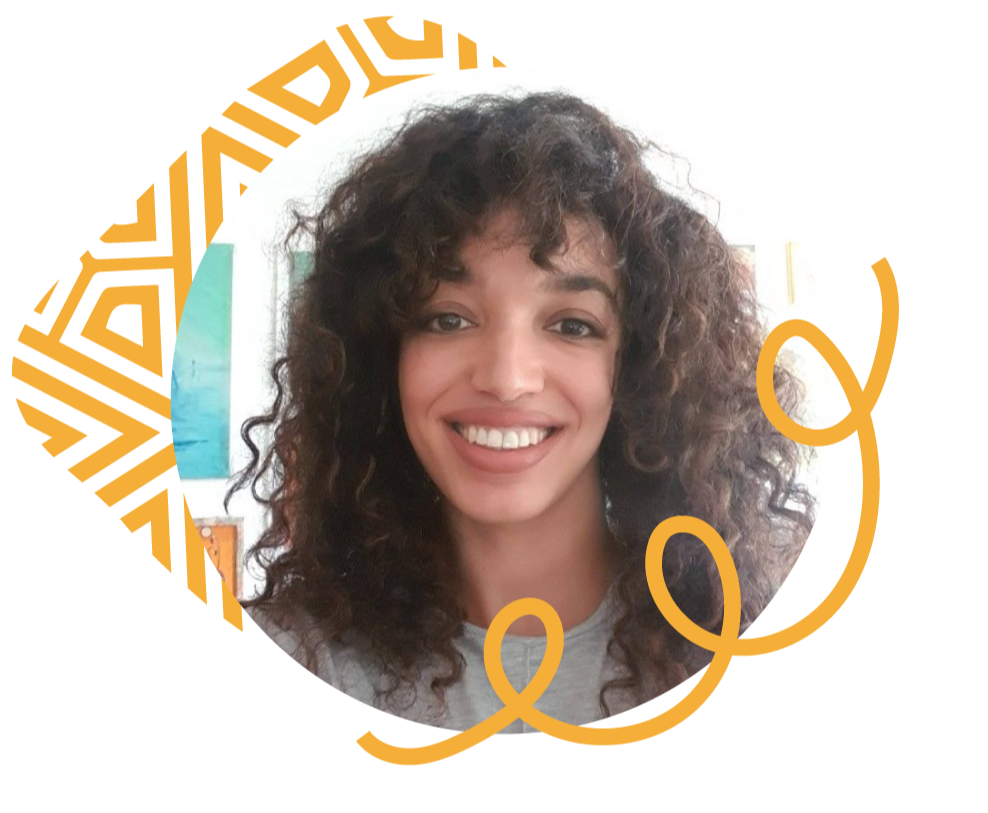
Dr Jessica Oddy-Atuona
Jess is the founder and director of Design for Social Impact Lab, a scholar activist whose work has moved from the classroom to humanitarian aid, programme design and philanthropy. Her doctoral research at the University of East London used digital storytelling action research with 60 young people across South Sudan, Jordan and the UK to trace how colonial legacies shape education in emergencies.
Selected publications
Published as Jessica Oddy.
- Oddy, J. and Raki, A. (2026) The bordering and de-bordering of refugees' higher education access. In Donà, G., Lounasmaa, A. and Squire, C., De-bordering Higher Education: Refugees, Universities and Social Justice, pp. 36-62. Bristol University Press.
- Masserano, E. and Oddy, J. (2026) The OMNI model. In De-bordering Higher Education, pp. 63-88.
- Esenowo, I. and Oddy, J. (2026) De-bordering higher education for forced migrants in digital spaces: digital storytelling and literacy. In De-bordering Higher Education, pp. 148-166.
- Singh, Y., Dragoș, S., Oddy, J., Sriprakash, A. and Walker, S. (2025) A case for embedding structural analyses of race and racism in comparative and international education. Compare: A Journal of Comparative and International Education, 1-19.
- Oddy, J. (2024) Retelling education in emergencies through the black radical tradition: on racial capitalism, critical race theory and fugitivity. Globalisation, Societies and Education, 22(3), 446-460.
- Oddy, J. and Adinsa, M. (2024) Reimagining humanitarianism and refugee research: decolonisation or symbolic gesture? Journal of Humanitarian Affairs, 6(1), 59-62.
- Oddy, J. (2023) Transnational, digital, critical youth participatory action research as a praxis in exploring education for forcibly displaced in South Sudan, Jordan and the UK. In Call-Cummings, M., Hauber-Özer, M. and Dazzo, G.P. (eds) The Routledge International Handbook of Critical Participatory Inquiry in Transnational Research Contexts. Routledge.
- Oddy, J., Harewood, M., Masserano, E. and Lounasmaa, A. (2022) Experiences of forced migration: learning for educators and learners: a report. International Review of Psychiatry, 34(6), 649-656.
- Lounasmaa, A., Masserano, E., Harewood, M. and Oddy, J. (2022) Strategies against everyday bordering in universities: the open learning initiatives. In Cantat, C., Cook, I.M. and Rajaram, P.K. (eds) Opening Up the University: Teaching and Learning with Refugees, pp. 275-292. Berghahn Books.
Bring us the question you are working on.
Tell us what you are trying to build, whether that is a module, a strand through a degree, a student programme or a funding bid, and we will find thirty minutes to talk it through.
EMAIL JESS