
Designing Otherwise
For Foundations and Funders
The Sector Doesn't Need More Capacity-Building. It Needs Different Conditions.
Most non-financial support offered to grantees is still designed around the funder's needs — their reporting cycles, their evidence frameworks, their definitions of what "good" looks like. We offer something different.
Most non-financial support offered to grantees is still designed around the funder's needs — their reporting cycles, their evidence frameworks, their definitions of what 'good' looks like. We offer something different.
Foundations that work with us don't just give their grantees better professional development. They change the relationship. Partners come back with stronger proposals, more honest evidence, and a clearer sense of their own theory of change. Programme staff leave our sessions reading applications differently — less extractively, more as thought partners than gatekeepers. And the work that gets funded starts to look more like what communities are actually doing, rather than a performance of need designed to satisfy a review panel.
That is what we mean by different conditions.
Design for Social Impact is a social enterprise founded by Dr. Jessica Oddy, built into a team of practitioners, researchers, and facilitators who collectively bring experience across humanitarian response, international development, community organising, Black feminist scholarship, and non-profits. Our faculty are drawn from across the globe — and many have been recipients of the very programmes and systems our participants are working to transform. That proximity to lived experience is not incidental. It is methodological.
We work from the belief that people most impacted by social and political systems should be leading the design of responses to them — not consulted at the margins. That conviction shapes who we hire, how we facilitate, and what we ask of the institutions we partner with.
We have worked with hundreds of practitioners across 20+ countries, from grassroots community-based organisations, networks ( Association of Charitable Foundations, Inter-agency Network Education in Emergencies) funders (National Lottery Innovation Unit) to INGOs and academic institutions. We partner formally with the University of East London and the University of Bristol to deliver capacity mobilisation to over 100 community based organisations and changemakers. And we do this work because we have sat on both sides of the funding relationship — and we know what it costs when capacity-building serves the funder's reporting needs instead of the partner's actual growth.
FEEDBACK FROM OUR PARTICIPANTS TELL US WE ARE DOING SOMETHING IMPACTFUL:

Average NPS across cohorts
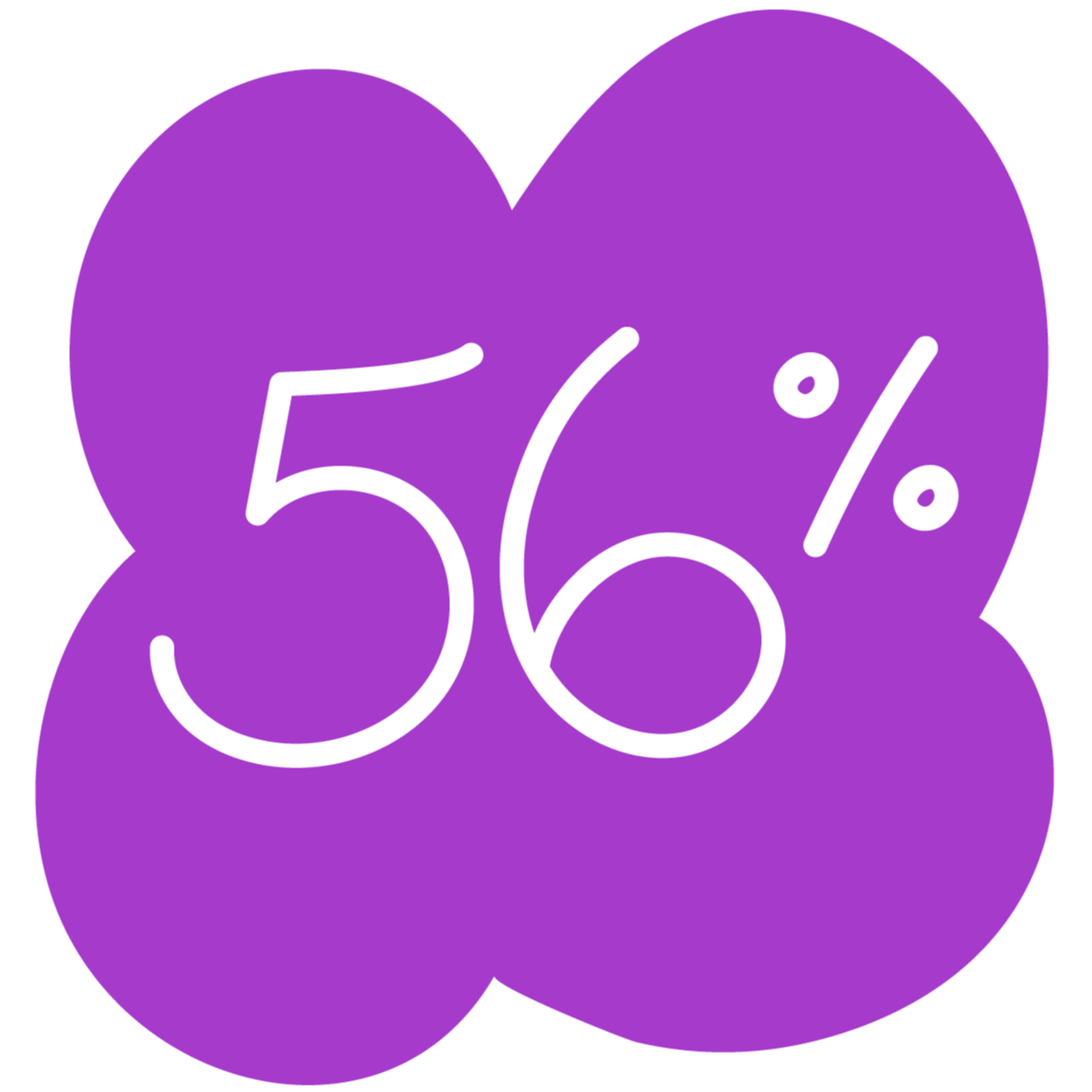
Of participants gave a perfect score

Countries represented in our cohorts
Participants have included practitioners from community-based organisations, social justice networks, humanitarian agencies, and academic institutions — across the UK, the Global South, and diaspora contexts.
Service One:
Bespoke Non-Financial Support for Your Grantee Portfolio
This is a tailored delivery partnership.
We work with your team to understand your portfolio, your relational commitments, and the contexts your grantees are operating in — and we design a support programme that fits.
What shifts in your grantees
BEFORE
- Programmes designed around the funder's logic
- Participation treated as consultation
- Evidence produced for compliance
- Practitioners isolated in their contexts
- Capacity built to serve the grant
AFTER
- Programmes designed around the community's own theory of change
- Participation that redistributes actual decision-making
- Evidence owned by the people who generated it
- Practitioners connected to a global peer community asking the same questions
- Capacity built to serve the mission – which sometimes challenges the grant

What this typically includes
- A scoping process that draws on information your grantees have already shared with you — no additional baseline reports, no extractive intake.
- Live facilitated sessions (online or in-person) on programme and service design, learning and evaluation, and equity-centred practice — adapted to the contexts your partners are actually working in.
- Group coaching cycles focused on application, reflection, and peer exchange.
- Optional clinic sessions for organisations needing more bespoke support.
Resistance to universalist standards of evidence — we work with local epistemologies and community-defined measures of success.
We don't treat your grantees as deficient. We don't impose our frameworks on top of theirs.
Who this is for: Foundations operating with trust-based values who want to offer non-financial support that is genuinely useful — not compliance-adjacent capacity building dressed up in equity language.
How a partnership works

Conversation, not an application
One call. We map your portfolio context and your grantees' needs.

We work with what you already have
No new intake forms. We draw on existing grantee information you hold.

Co-designed, not off-the-shelf
We build the support around your partners' contexts – not a pre-packaged syllabus.

Delivery — live, adaptive, light-touch for you
Facilitated sessions, group coaching, peer exchange. We run it; you stay connected.

Learning stays with your partners, not with us
Close-out shared back to you. Grantees leave with something they own.
No new contracts to manage. No additional reporting burden. No added overhead for your team.
Service Two:
Open Programmes for Grantee Partners
We run two open, global, cohort-based programmes that foundations can access for their grantee partners — each targeting a different practice gap.
Programme One: The Design for Social Impact Accelerator
The Accelerator is our flagship open programme, with a new cohort starting June 5th 2026. Across eight weekly live sessions, it brings together practitioners, programme leads, and organisational leaders to interrogate and redesign how social impact work gets built — from proposals and budgets to participation and evidence.
It is structured, facilitated, and applied. Participants work on their real programmes and proposals throughout, supported by a small, intentional cohort of 15–20 people drawn from INGOs, CBOs, foundations, and policy teams across the globe. Every session is co-facilitated with lived-experience and movement practitioners.
This is professional development with political depth — the kind that changes how your staff and grantees show up in their work, not just what they know.

THE ACCELERATOR IS RIGHT FOR YOUR GRANTEES IF:
- They write proposals, shape programmes, or design interventions — and sense that something in how that work is structured is politically compromised, even when the intentions are good
- They are ready to treat programme design not as a technical task but as an exercise in power — asking whose knowledge counts, who controls the budget, and what gets called evidence
- They want to move beyond localisation and participation as rhetoric, and practice something that actually redistributes decision-making
- They are working inside institutions and want to make different choices — even under constraint — rather than simply optimise what already exists
- They want slow, relational learning in a small, intentional cohort of 15–20 people drawn from INGOs, CBOs, foundations, and policy teams across the globe
FOR FOUNDATIONS:
The Accelerator is particularly well-suited for grantee staff who hold design and proposal power — programme managers, MEL leads, fundraising teams — but who have had little space to interrogate the political assumptions baked into how that work is done.
What you will notice in your partners after the Accelerator: they ask different questions in programme meetings. They push back — thoughtfully — on logframes and theory of change templates that don't fit their context. They write proposals that are more grounded, more specific, and harder to dismiss. And they come to reporting conversations with you as genuine thought partners rather than compliance performers.
This is not professional development as usual. It is an invitation to practise differently — and the difference shows up in the work you fund.
Learn more about Design for Social Impact Accelerator here
What your grantees and staff will leave with
BEFORE
-
Programme design treated as a technical task
-
Participation and localisation as rhetoric
-
Proposals written to satisfy funder criteria
-
Isolated in institutions, aware something is wrong
-
Professional development that adds knowledge
AFTER
-
Programme design understood as an exercise in power – asking whose knowledge counts
-
Concrete tools for redistributing decision-making in their actual work
-
Proposals that hold the community's own theory of change under funder pressure
-
Connected to a global cohort of 15–20 practitioners asking the same questions – and practising differently together
-
Professional development that changes how they show up in a programme meeting on a Tuesday
Programme Two: Research Design for Social Impact
Across the sector, monitoring, evaluation, and research are treated as neutral technical tasks. They are not. They decide whose knowledge gets counted, which communities are reduced to data points, and whether evidence serves the people who generated it or the institutions that fund its collection.
Research Design for Social Impact is an 8-week global programme that has brought together hundreds of practitioners, evaluators, academics, and community-led organisation staff to do this work differently. Participants have joined from over 30 countries — including, in one cohort, a practitioner who attended live sessions from Gaza across electricity outages. That commitment speaks to something real about what this programme offers.
WHAT YOUR GRANTEES WILL WORK THROUGH:
Across eight structured sessions, participants move through the full arc of equity-centred MERL practice — from interrogating why conventional evidence frameworks were never designed for community-led organisations, through intersectionality and anti-colonial research approaches, activist methodologies including photovoice, community cartography, and QuantCrit, to co-analysis, pedagogies of care and solidarity, and Afro-futurist approaches to imagining liberated futures for learning and evaluation.
This is not a course in how to write a better evaluation report. It is structured around DFSI's eight guiding principles — co-design, pedagogies of care and solidarity, anti-oppressive approaches, environmental justice, intersectionality, systems thinking, structural change, and action — and each session is co-facilitated with practitioners who bring lived experience of the systems being examined.
THE PROGRAMME IS RIGHT FOR TOUR GRANTEES IF:
- They are being asked to generate evidence and demonstrate impact, but their existing MERL practices feel extractive or misaligned with their values
- They want to build genuine evaluative capacity — not just produce compliance data for funders
- They are working with communities whose knowledge is systematically undervalued by dominant evidence frameworks
- They want tools they can actually use: participatory action research, community-led data analysis, strategies for reporting to funders without erasing what matters
WHAT PARTICIPANTS LEAVE WITH:
A personalised action plan, tried-and-tested methods grounded in their actual work, and membership of a global community of practice spanning INGOs, CBOs, academic institutions, and policy teams.
For foundations: Rather than training your grantees to produce better data for you, we help them build knowledge systems that serve their own decision-making first — and that can translate into language external systems recognise, without erasing what matters.
What you will notice in your partners after this programme: they bring you evidence that is more honest, more specific, and more useful — because it was generated by people who had a stake in understanding it, not just reporting it. They challenge evaluation frameworks that flatten their work. And they come to learning conversations with you carrying the voices of the communities they work with, not just proxy indicators.
The result is a funding relationship grounded in real knowledge — not performance.
Average NPS: 9.0/10 · 56% of participants gave a perfect score
For eligible UK-based participants, the programme links to the University of East London's Social Justice MRes — with pathways to fully or partially funded postgraduate research study through UKRI.
Learn more about Research Design for Social Impact
What working with us changes for foundations
Funders that engage with DFSI over time don't just offer better professional development.
They find themselves in more honest conversations with their partners.
- They start receiving proposals that challenge their frameworks — and have the capacity to recognise that as a sign of strength, not a compliance problem.
- Their staff stay longer, because the work they're doing feels aligned with why they came into the sector. And their portfolios start to reflect something closer to their values — because the organisations they fund are no longer translating their best work into a language designed to make it invisible.
That is what we mean by changing the conditions. Not just improving the programmes.
Shifting what the relationship between funder and funded makes possible.
Service Three:
Designing Otherwise — Asset-Based Proposal Design
Most grant writing courses teach people to write better needs statements. Designing Otherwise teaches people to stop writing them.
Designed for foundations investing in grassroots and community-led partners, Designing Otherwise is a dual-track training that works at both ends of the funding relationship — equipping grantees to propose from a place of strength, and equipping foundation staff to receive and reward what they find.
What changes

GRANTEE TRACK
- Proposals written from community assets, not community deficits
From: performing need → To: articulating power - Stronger funded proposals with values-aligned funders
From: generic applications → To: targeted, grounded pitches - Confidence to hold their own theory of change
From: funder-shaped narratives → To: community-led framing - Reduced time and harm in the proposal process
From: exhausting deficit writing → To: generative documentation

FOUNDATION STAFF TRACK
- Ability to read and champion asset-based proposals
From: deficit-trained review → To: strength-literate assessment - Capacity to spot and name deficit framing in applications
From: unconscious extraction → To: critical grantmaking lens - Shift in criteria and application design
From: compliance questions → To: asset-inviting prompts - Partnership posture with grantees, not gatekeeping
From: funder as judge → To: funder as co-investor

Shared system-level outcome
A funding relationship where the proposal tells the truth — about assets, about power, about what change actually looks like
Grantmaking infrastructure that rewards proximity and community knowledge, not just grant-writing fluency
A foundation portfolio that reflects its values — not just its application form
Why Work With Us
We are a practice built by people who have worked inside the sector's contradictions for over fifteen years — as humanitarian aid workers, community-based organisation founders and leaders, classroom teachers, PhD researchers, community organisers, and grant recipients — and who have sat on both sides of the funding relationship.
That proximity matters. We know what it feels like to write a proposal that sanitises your politics to get the grant. We know what it costs a community-led organisation to perform impact for an audience that was never really listening. And we know that most capacity-building is designed to make that performance more polished, not less necessary.

We offer something different because we are something different:
We bring insider knowledge, not outside expertise. Dr. Jessica Oddy holds a PhD exploring inequities in youth programming and aid systems, has worked in over 15 countries including in domestic programming in the UK and humanitarian response. Our faculty includes Black feminist researchers, decolonial practitioners, and community organisers — people who have been inside the systems your grantees are navigating, not just studied them.
We are formally accountable to rigorous standards. We work in partnership with the University of East London and the University of Bristol, funded by UKRI. Our programmes are not aspirationally anti-oppressive — they are built on frameworks that have been tested with hundreds of practitioners across 30+ countries and linked to accredited postgraduate research pathways.
We will tell you the truth. If a programme design isn't serving your partners, we will say so. If your foundation's reporting requirements are part of what's exhausting your grantees, we will name that too. Honest partnership is not a value we display on a website — it is what we are contractually committing to when we work with you.
We believe foundations have a genuine role in shifting the conditions that make good work harder. Non-financial support is one of the most powerful and underused tools available to you. We can help you use it in a way that actually changes something.
All partnerships are scoped through an initial conversation — contact us at [email protected] to discuss what fits your portfolio.
Partnership investment
All partnerships are scoped through an initial conversation — contact us to discuss what fits your portfolio.
What working with us changes for foundations
Funders that engage with DFSI over time don't just offer better professional development.
- They find themselves in more honest conversations with their partners.
- They start receiving proposals that challenge their frameworks — and have the capacity to recognise that as a sign of strength, not a compliance problem.
- Their staff stay longer, because the work they're doing feels aligned with why they came into the sector. And their portfolios start to reflect something closer to their values — because the organisations they fund are no longer translating their best work into a language designed to make it invisible.
That is what we mean by changing the conditions. Not just improving the programmes.
Shifting what the relationship between funder and funded makes possible.

Ready to explore a partnership?
Whether you're looking for bespoke non-financial support for your grantee portfolio, cohort access to our open programmes, or a conversation about what your partners actually need — we'd love to hear from you.
Email us at [email protected] or visit designforsocialimpact.io to learn more.
We don't do sales calls. We do conversations. Get in touch and let's figure out together whether this is the right fit.